Girmitiyas Bound by Promise: The Global Journey of Indentured Labour
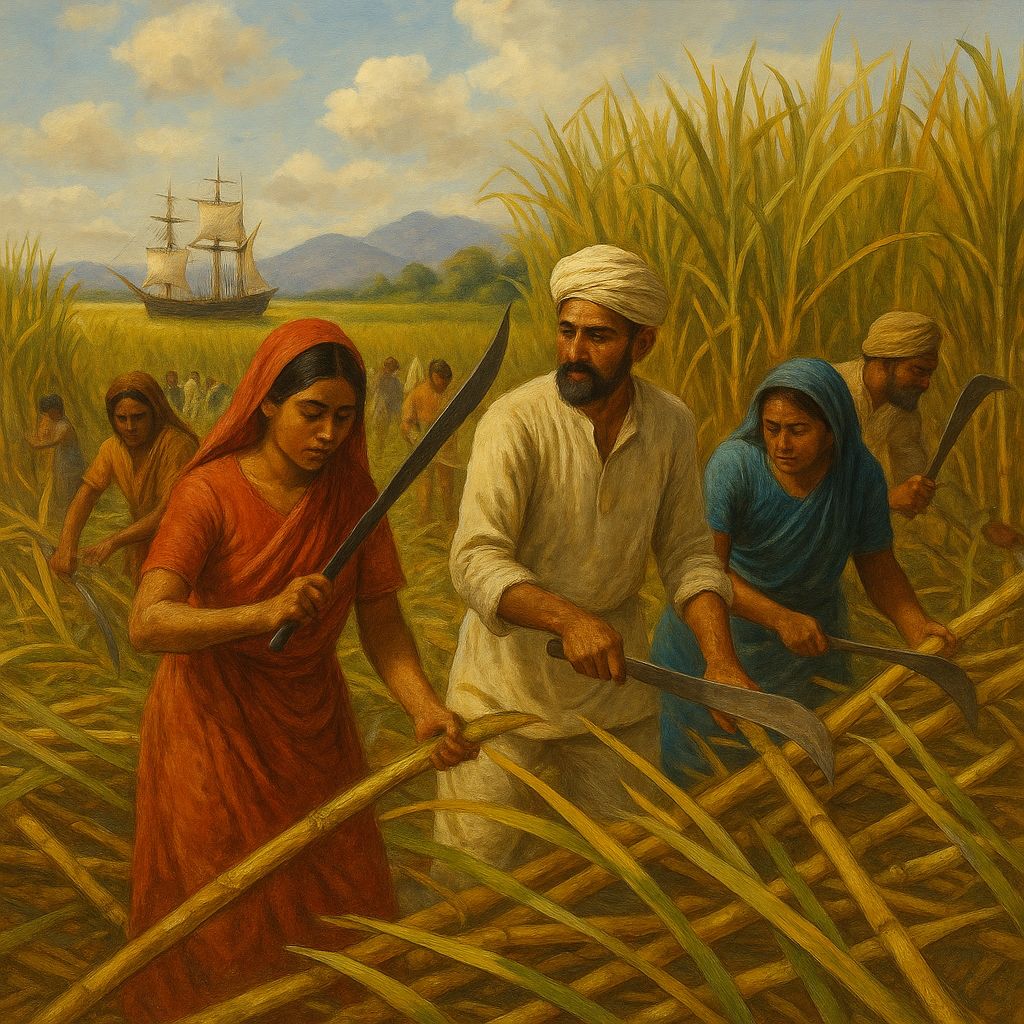
From the abolition of slavery to the cane fields of the empire, the girmit contract carried more than a million Indians across the seas — and their descendants, once dismissed as 'coolies', now lead the nations they helped build.
Girmitiya descendants awakened
At the Academic International Conference held at Lucknow University, India, on 26 September 2025, a team of international scholars affiliated with the Mondial Online Girmitiyalogy University (MOGU) took part in the final day of the workshop series. The interdisciplinary team comprised Dr Seshni Moodliar Rensburg (psychiatrist, UK/South Africa), Ms Aartie Mahesh MSc (counsellor and management specialist, Amsterdam/Suriname), Ms Patricia Sudais Poinam BA/BSc (obstetric nurse, UK/Trinidad & Tobago), and Mr Chandan Kumar Singh MA (economist and coordinator, GGLASC). The lectures and sessions were led by Professor Dr Shardhanand H. Singh, initiator of Girmitiyalogy and CEO of GGLASC. This joint participation marked both a significant success and a milestone for Girmitiyalogy, an emerging field of study.
Historical focus
When slavery was abolished across the European empires, the plantations still demanded labour. The solution came from India — this time through the system of girmit, a five-year contract that promised wages, food, and a return passage. Thousands of Tamil, Telugu, and Malayali labourers left Madras, coastal Andhra, and Kerala for the colonies, joining even greater numbers from the north.
After the abolition of African slavery, between 1834 and 1917 an estimated 1.3–2 million Indians were transported under indenture. Mauritius received 453,063; British Guiana 238,909; Trinidad 147,596; Suriname 34,304; Natal 152,184; and Fiji nearly 61,000. Each number tells of a family uprooted, a dream deferred, a culture transplanted. The pressure to migrate was created by the policies of the British Raj and the wealthy zamindars (landlords), which drove many in the north and south of India into impoverishment and degradation. Most emigrants were peace-loving citizens from the states of Uttar Pradesh and Bihar.
From 'coolitude' to academic leadership
Indenture promised order but delivered hardship. Overseers enforced strict discipline; absences were fined or punished with imprisonment. Mortality rates were high, and more than a third of the migrants returned home. Yet those who stayed built temples, preserved their languages and festivals, and raised children who would go on to transform their host societies. Today, Indo-Mauritians, Indo-Caribbeans, Indo-South Africans, Indo-Fijians, Indo-Guyanese, and Sarnami Hindustanis are leaders in politics, business, law, and the judiciary, as well as in teaching, academia, medicine, and economics. The journey from 'coolitude' to academic leadership is now a fact.
For decades, the archives recorded indenture in the cold language of contracts and shipments. The human story — of resistance, resilience, and faith — was silenced. Girmitiyalogy, the interdisciplinary study of indentured labour and its legacy, seeks to restore these voices. At Lucknow University, a global conference on Girmitiyalogy recently concluded, bringing together scholars and descendants from five continents. A major outcome was the launch of Girmitiyalogy.com as a global research platform, enabling genealogical research and curriculum development for universities and schools worldwide.
From chains to bridges
Indenture has long been described as “a new system of slavery.” Yet from those chains arose a people who turned survival into strength, silence into song, and pain into pride. Our challenge today is clear: we must teach this history not as a colonial afterthought, but as a defining chapter in the story of global migration and human courage. Girmit carries the memory of struggle, dispossession, and dehumanisation — yet also of extraordinary resilience. It gave birth to a hybrid identity, forged from tears and determination, rooted in the ancestral soil of Bharat Mata but blossoming across the oceans.
Though Girmit descendants now hold new nationalities, they remain connected by invisible threads of memory, language, ritual, and shared destiny — forming a transnational community bound by a common Indian cultural inheritance. This is not merely survival; it is renewal, a living testament that identity can be both global and deeply rooted.
For tomorrow and our descendants
Let every university make Girmitiyalogy part of its curriculum. Let every scholar, student, and descendant trace the journey of their forebears. Let every nation recognise Girmit history as part of humanity's common heritage. And let the United Nations recognise the system of Indian bonded labour as a crime against humanity, as it has already done for the institution of slavery.
Only then will girmit become more than a story of chains. It will become a bridge — linking continents, uniting past and future, and transforming pain into a powerful legacy of dignity, solidarity, and hope, helping to repair the ancestral damage wrought by colonial violence and dehumanisation.
References
- Aggarwal, A. “Indentured Migration, Caste and Electoral Competition in Colonial India.” Duke University, 2022.
- “Indian Indenture System.” Wikipedia, Wikimedia Foundation, 2025.
- “Indentured Labour from South Asia (1834–1917).” Striking Women, striking-women.org.
- “Colonialism and Indian Indentureship during the 19th Century.” Frontier Weekly, 2023.
- “The New Science of Girmitiyalogy.” Girmitiyalogy.com, 2025.
- Harinandan Singh, Shardhanand. Loss of Feelings. Rotterdam, 2025.
Published in the BrainGain College Girmitiyalogy library. Back to all papers →